Recently, Zhu Xun and Guo Linsheng, two postgraduate students from the School of Electronic and Electrical Engineering of the 2022 grade, were respectively accepted to present their related papers at the 38th International Conference on Industrial, Engineering & Other Applications of Applied Intelligent Systems and conducted online academic report exchanges, showcasing their cutting-edge research achievements in the industrial field.
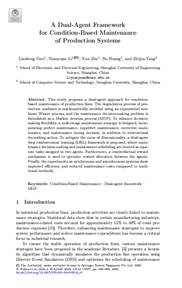
Guo Linsheng's thesis is titled "A Dual-Agent Framework for Condition-Based Maintenance of Production Systems". The research focuses on equipment maintenance strategies in production systems. In response to the shortcomings of traditional maintenance strategies in terms of flexibility and decision-making efficiency, it proposes a dual-agent maintenance optimization framework based on deep reinforcement learning. This framework decouples the maintenance strategy selection from the maintenance time scheduling task and accomplishes them through two independent but collaborative agents, effectively enhancing the flexibility and adaptability of the strategy decision-making. The research introduces a nonlinear degradation process model to describe the evolution of equipment status and designs a multi-stage maintenance mechanism covering various repair methods, which enhances the adaptability and scalability of the framework in complex industrial scenarios. Empirical test results show that this framework has significant advantages in improving system stability, reducing maintenance costs, and optimizing resource scheduling, providing an innovative solution for intelligent maintenance technology.
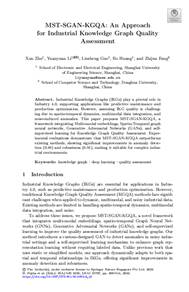
Zhu Xun's papers presented at the conference were titled "GAN-MKED: Adversarial Learning for Industrial Knowledge Graph Error Detection" and "MST-SGAN-KGQA: An Approach for Industrial Knowledge Graph Quality Assessment". Focusing on the quality assessment and error detection problems of industrial knowledge graph, two innovative technologies are proposed, which effectively solve the quality challenges caused by multi-modal data fusion and noise interference in dynamic industrial environments. Among them, the industrial knowledge graph quality evaluation framework MST-SGAN-KGQA realizes the accurate evaluation of knowledge graph quality in complex industrial scenarios by integrating multimodal data embedding, spatiotemporal graph neural network, generative adversarial network and self-supervised learning. The framework integrates the multimodal features of text, image and temporal data, dynamically captures the spatiotemporal dependencies in the knowledge graph with the help of spatiotemporal graph neural network (MST-GNN), and uses generative adversarial network to enhance anomaly detection capabilities, while the self-supervised learning task improves the generalization performance of the model under unlabeled data. Experiments show that the proposed framework performs well on the industrial equipment maintenance dataset (IEMD) and production process management dataset (PPMD), with an anomaly detection rate of 0.88, and maintains robust performance in a high-noise environment of 20%, which is significantly better than the existing methods, and provides reliable knowledge support for predictive maintenance.
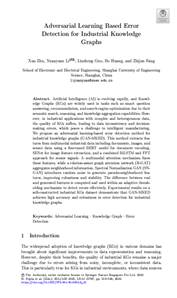
The adversarial learning error correction technology GAN-MKED uses spectral normalization generation adversarial network (SN-GAN) combined with relational perception graph attention network (R-GAT) to accurately identify the error triple in the knowledge graph. This technology realizes the deep integration of multimodal features by fine-tuning the BERT model to process document data, SENet to extract image features, and BiLSTM and FFT to fuse sensor signals, and improves the accuracy of error detection through the adaptive threshold mechanism. In the Industrial-KG dataset containing 120,000 triples, its F1 value reached 85.4%, providing an efficient solution for error correction of industrial knowledge graph.
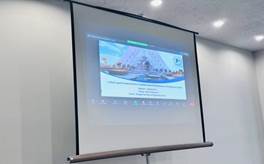
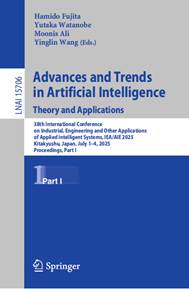
It is reported that the 38th International Conference on Industry, Engineering and Other Applied Intelligent Systems continues the tradition of emphasizing the application of applied intelligent systems in solving practical problems in the fields of engineering, science, industry, automation and robotics, business and finance, medicine and biomedicine, bioinformatics, cyberspace and human-computer interaction


