To fully leverage the advantages of industry and the role of enterprises in collaborative education, strengthen university-enterprise cooperation, and further advance the practice and exploration of industry-education integration, Dr. Zhou Lei, a senior expert from TE Connectivity (Shanghai) Co., Ltd., entered the "Modern Control Theory" classroom offered by our School on the morning of September 24, delivering a fresh corporate-led session for the students.
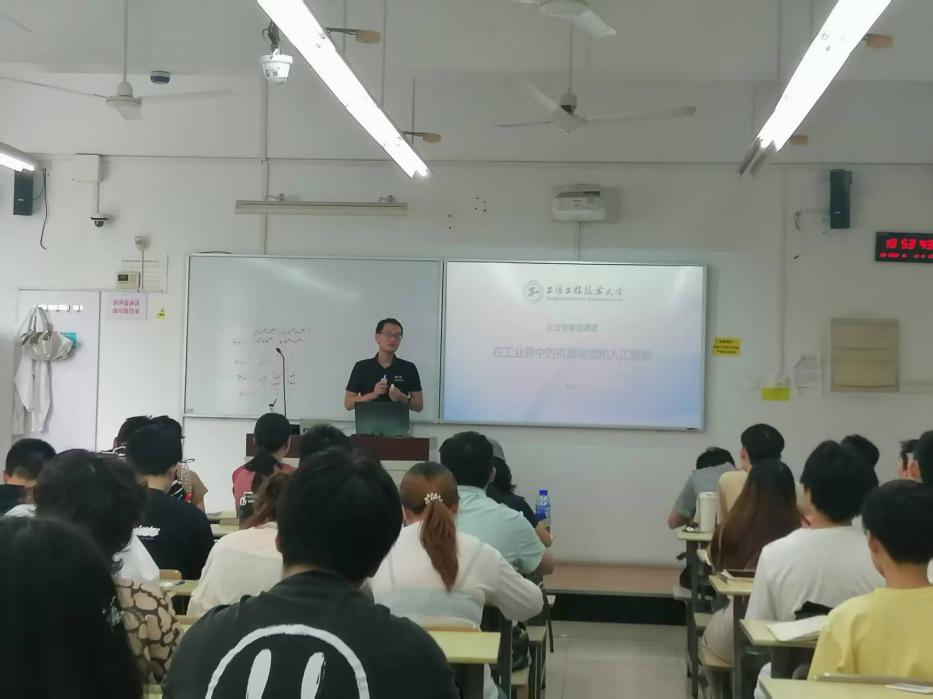
This lecture used the automobile as a platform to guide students in deeply exploring the principles of automatic control. Focusing on the car as a complex system, it detailed how connectors serve as "neural hubs" to precisely transmit signals and power, thereby enabling automatic control of critical functions such as engine management, vehicle stability, and autonomous driving. Using this example, the lecture prompted students to consider how modern control theories (such as feedback control and optimal control) are concretely applied and validated in automotive control systems, effectively integrating abstract theory with practical engineering.
Subsequently, the discussion expanded from specific technical aspects to the level of national strategy, introducing students to the grand blueprint and profound expectations for intelligent manufacturing outlined in national planning. It emphasized that automation technology is a core driver of future industrial upgrading, inspiring students to build a solid foundation and aim for significant achievements in this field.
In the segment on industrial applications, Dr. Zhou systematically outlined six typical applications of machine vision control: high-precision visual guidance, in-depth process analysis, reliable visual measurement, automated identification and code reading, stringent quality inspection, and efficient positioning and sorting. Through vivid case studies and active interactive Q&A sessions, students gained a more intuitive and profound understanding of how vision technology empowers "intelligent manufacturing."
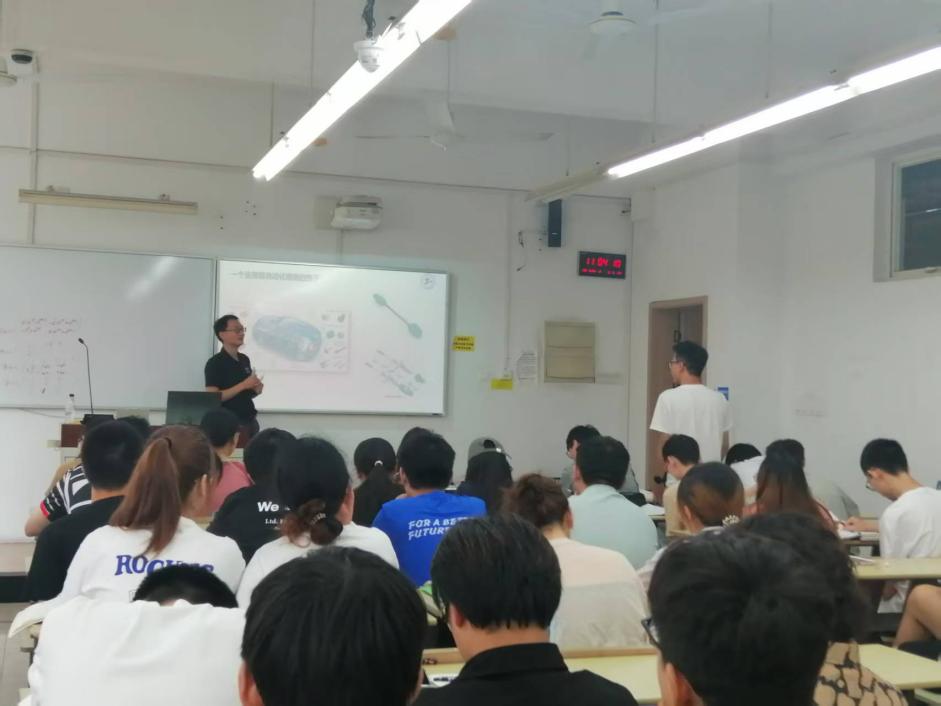
Finally, Dr. Zhou emphasized the eternal principle of "safety first" in industrial automation, reminding students that functional safety and human-machine collaboration safety must be prioritized in any control system design and application. The entire lecture featured substantial content that blended theory with practice, effectively sparking students' strong interest and future aspirations in the field of automation.


